Project Solaris 100-Day Calendar Strategy
Pick each day’s card with intent — balance Battle, Rest, Learn, Shopkeeping, and Social through Trial Ceremonies.
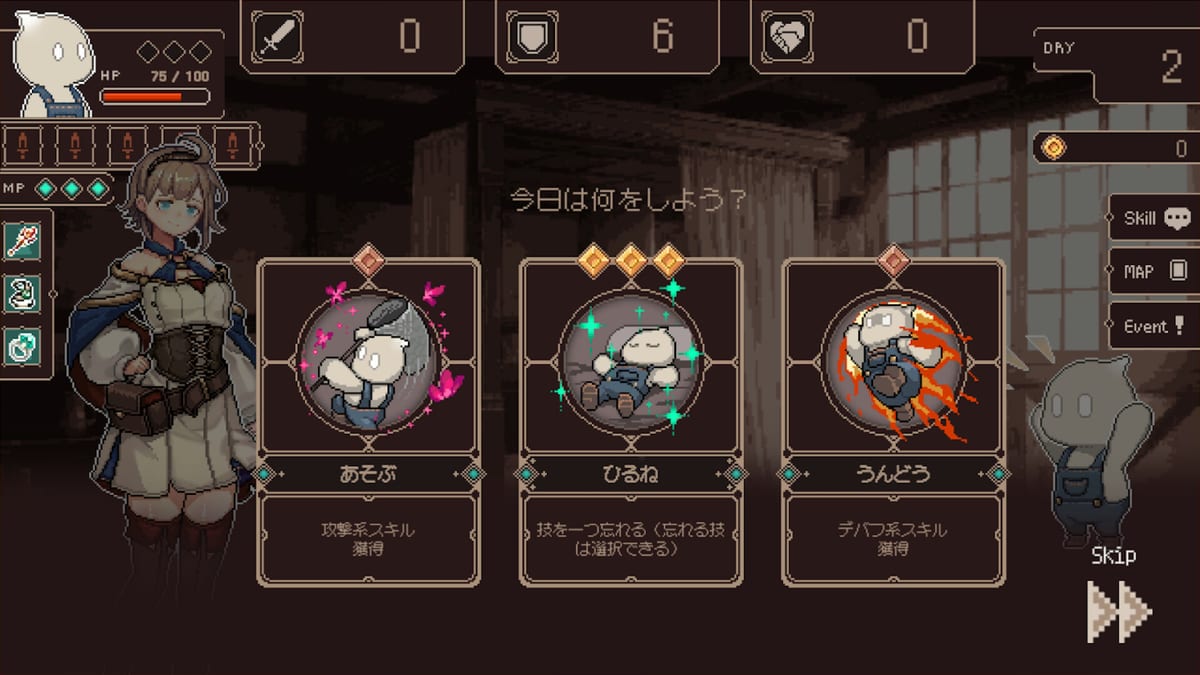
The spine of Project Solaris is a 100-day campaign. Every morning you choose one of three action cards — commonly Battle, Rest, Learn skill, Shopkeeping, or Social / Development — and that single pick advances the calendar. Elites pressure around Day 10. Bosses or Trial Ceremonies arrive about every 20 days. Day 100 is the final Trial. This strategy guide teaches how to budget those days so money, Trust, skills, and readiness peak when the story demands a fight. Pair it with Shopkeeping, Trust and Bond, Combat QTE, and the Tier List Hub for investment priority.
The daily decision framework
When three cards appear, score each against four resources:
- Combat readiness — Can Hom yellow the skills you need tomorrow?
- Money — Can you afford the next Solaris purchase or Hom craft batch?
- Trust / Reliability — Are hard skills still gated?
- Skill coverage — Did Learn unlock something you will actually use before the next ceremony?
Pick the card that repairs the lowest score unless a hard calendar flag (elite, boss, finale) forces a Battle or Rest. Random “whatever looks fun” picks are how players arrive at Day 18 broke, untrusted, and overcaffeinated on Rest debt.
Cadence map
Days 1–9 — Foundation
Goals from Getting Started: learn the UI (Controls), land yellow QTEs, take at least one Social if Trust is flat, and open a money lane. Do not spend this entire block only on Battle. One or two Shopkeeping days early prevent a gear cliff at Day 10.
Day 10 — Elite window
Arrive with:
- Practiced yellow timing
- At least mid confidence on one red-capable skill if Trust allows
- Enough gear that Hom’s kit matches skill flavor
If you are underprepared, a Rest or Shopkeeping day at 8–9 is better than a pride Battle that bricks the elite and cascades.
Days 11–19, 21–39, 41–59, 61–79, 81–99 — Intervals
Each interval between ~20-day ceremonies should complete a mini-project:
- Economy interval — Shopkeeping focus plus targeted crafts (Shopkeeping)
- Bond interval — Social / Development to unlock the next QTE tier (Trust and Bond)
- Kit interval — Learn skill plus Battle practice for the new commands (Combat QTE)
- Recovery interval — Rest after a messy ceremony so click quality returns
Rotate projects. Repeating only Battle intervals creates rich corpses with no Trust; repeating only Social creates beloved partners who cannot fund gear.
~Day 20 / 40 / 60 / 80 — Boss or Trial Ceremony
Treat the day before as a checkpoint:
- Warm-up Battle if you have been shopkeeping for a while
- Confirm Hom gear matches the planned skill list
- Confirm Trust supports the hardest command you intend to click
- Sleep on Rest if fatigue showed in recent blacks
Ceremony day itself is execution. Greed red only on turns you planned.
Day 100 — Final Trial
Everything converges: mechanical skill, bond, economy, and any ending-facing milestones you have been tracking (Endings). Do not invent a brand-new kit on Day 99. Stabilize, warm up, and play the plan.
Resource balance examples
Broke but strong Trust — Next offers: prefer Shopkeeping; delay optional Social.
Rich but whiffing hard skills — Prefer Social, then a practice Battle.
Great kit, shaky hands — Prefer Rest, then a low-stakes Battle.
Empty skill bar — Prefer Learn, then Battle to install muscle memory.
Balanced resources, ceremony in two days — Prefer Battle warm-up or Rest; avoid experimental crafts the night before.
Shopkeeping versus Battle income
Battles spike materials and combat XP for your fingers. Shopkeeping sessions smooth gold for Solaris buy-anytime pieces and Hom bulk crafts. Strategy detail belongs on Shopkeeping, but calendar-wise: schedule shop blocks in the first half of an interval so crafted gear exists for ceremony week, not the morning of.
Linking strategy to rankings
Once the loop is comfortable, use the Tier List Hub to decide which skills and gear lines deserve Learn and craft slots. Tier lists without calendar sense still fail Day 100; calendar sense without priority still wastes gold. Use both.
Cast and side stories on the clock
Social days double as story progress with Tetia, Croisé, August, Melchior, and others (Players Hub). If you care about multiple endings, you cannot zero Social forever — but you also cannot Social through every ceremony underleveled. Alternate intentionally.
Anti-patterns
- Ignoring Day 10 until it arrives
- Crafting random Hom gear the morning of a Trial
- Learning three skills you never yellow in practice
- Skipping Rest until black gauges become normal
- Reading ending guides instead of fixing Trust two ceremonies in a row
Checklist before each ceremony week
- Yellow consistency on core skills — Combat QTE
- Trust high enough for the planned hard skill — Trust and Bond
- Cash and crafts done — Shopkeeping
- Cursor habits warm — Controls
- Ending-facing flags noted if relevant — Endings
Return to the Guides Hub for the full index. The 100-day structure is fair when you treat every card as a budget line, not a coin flip.
Frequently Asked Questions
Quick answers for Project Solaris players.
How often are bosses in Project Solaris?
Expect elite pressure around Day 10, a boss or Trial Ceremony about every 20 days, and the final Trial on Day 100.
Should I Battle every day?
No. Rotate Battle with Rest, Learn, Shopkeeping, and Social so money, Trust, skills, and readiness all rise before ceremonies.
What if I am broke before a Trial?
Prioritize Shopkeeping earlier in the interval next time. Emergency shop days help, but crafted gear needs lead time.
When should I take Social cards?
When Trust lags behind your Learned skills or when you are seeding ending-related side stories without abandoning combat prep.
Where do I decide what to invest in?
Use this calendar guide for timing and the Tier List hub for priority once you understand the loop.
Is the game single-player only?
Yes. Project Solaris is a single-player Steam PC release with a Switch version planned later — plan the 100 days for one player.